

Free tool for calculating common area fees in condominiums
The allocation of expenses is one of the key elements in the financial management of a condominium. However, it can quickly become complex when distinguishing between general common expenses, specific common expenses, and common areas with restricted use (CARU).
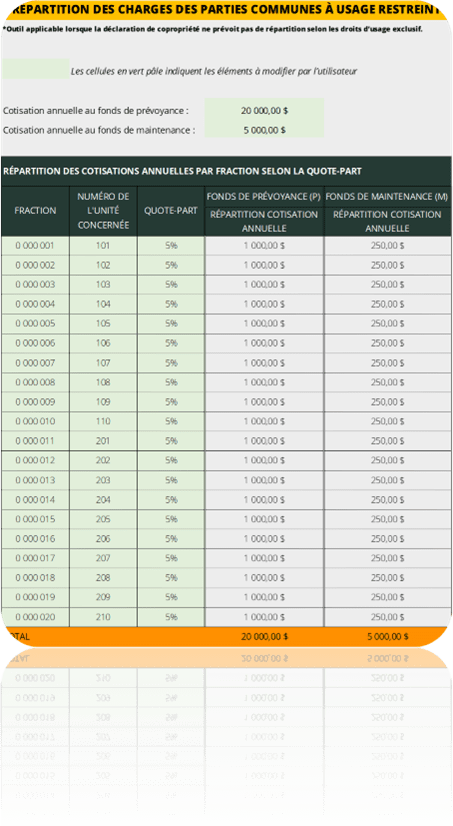
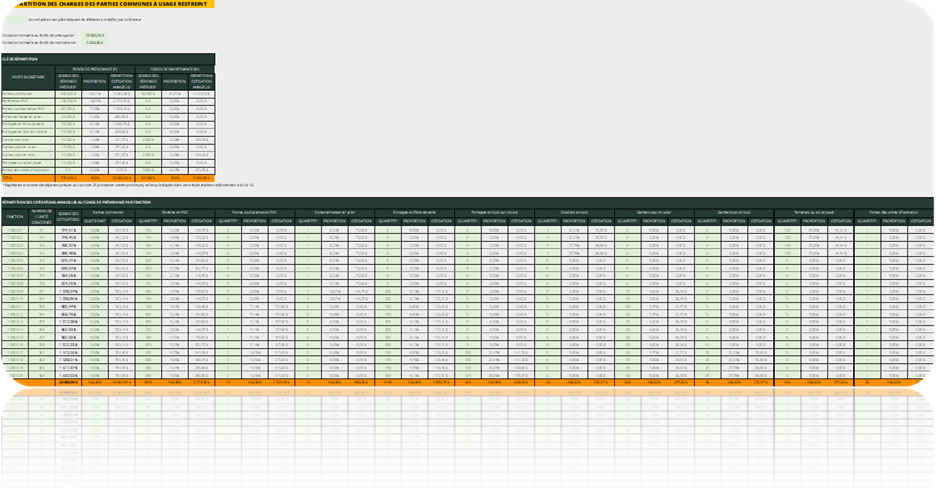
To help you apply these concepts in practice, Borée Professional Services provides a free Excel tool to help you structure the allocation of expenses in a condominium.
This tool was designed to help condominium association administrators, managers, and professionals quickly visualize each co-owner’s contribution.
What this tool does
This tool allows you to:
Automatically calculate the contribution of each co-owner with or without an allocation formula
Identify the common areas (CA) and the common areas with restricted use (CARU)
Apply different allocation formulas depending on the expenses
View allocations based on ownership share or exclusive use
Organize expenses related to the maintenance fund and the reserve fund
Important to know
This tool is designed to facilitate the understanding and application of the principles of expense allocation. However, the declaration of co-ownership remains the legal document that determines the official allocation method.
In case of doubt, it is recommended to consult a professional specializing in co-ownership, such as a lawyer or a notary.
Learn more
For a detailed understanding of the principles of expense allocation, see our comprehensive guide on expense allocation in condominiums in Quebec
FREQUENTLY ASKED QUESTIONS
-
No, an allocation formula is not always necessary in a condominium.
In many buildings, the share allocated to each unit already takes into account certain unit-specific factors, sometimes including the existence of common areas with restricted use (PCUR). In these situations, applying the share percentages set forth in the declaration of co-ownership may be sufficient to allocate expenses.
An allocation formula generally becomes necessary only when the declaration of co-ownership specifically mentions it, particularly for certain expenses related to the maintenance or replacement of common areas with restricted use, such as balconies, windows, or parking spaces.
It is therefore essential to consult the declaration of co-ownership, which is the definitive legal document for establishing the method of allocating expenses in a co-ownership.
-
In Quebec, the allocation of common expenses in a condominium is primarily determined by the share of each unit, as provided for in section 1064 of the Civil Code of Quebec.
Each co-owner therefore contributes to common expenses based on the relative value of their unit. However, certain expenses related to common areas with restricted use (CARU) may be allocated solely among the co-owners who have exclusive use of them.
-
Les charges communes générales concernent l’ensemble de l’immeuble et sont payées par tous les copropriétaires selon leur quote-part.
Les charges communes particulières concernent seulement certains copropriétaires, notamment lorsque les dépenses sont liées à des parties communes à usage restreint, comme les balcons, terrasses ou stationnements.
-
The ownership share represents the proportion of ownership that each unit holds in the building’s common areas.
It is determined when the condominium is established and is used, in particular, to calculate:
contributions to common expenses
voting rights at meetings
contributions to the condominium’s reserve fund
The method for calculating the ownership share is normally specified in the declaration of condominium ownership.
-
An allocation formula is a method used to distribute certain expenses more equitably among the affected co-owners.
It is often used when expenses relate to common areas with restricted use, such as:
balcony maintenance
parking lot maintenance
replacement of rooftop terraces
In these situations, only the co-owners who have exclusive use of these areas contribute to the costs.
-
The method for allocating expenses is defined in the declaration of co-ownership, which is the building’s fundamental legal document.
It includes, in particular:
the definition of common areas and private areas
the shares of each unit
the rules governing common areas with restricted use
-
Un outil de répartition des charges permet de :
structurer les dépenses de la copropriété
appliquer correctement les quotes-parts et clés de répartition
visualiser la contribution de chaque copropriétaire
éviter les erreurs dans la gestion budgétaire.
Il facilite aussi la compréhension des règles financières pour les administrateurs et gestionnaires de copropriété.
-
No. This tool is designed to help you understand and apply the basic principles.
However, the declaration of co-ownership remains the definitive legal document, and certain situations may require the assistance of a specialized professional, such as a lawyer, notary, or CPA.
-
No, not necessarily.
Some condominium bylaws specify that the allocation formula applies when the calculation is possible and significantly useful.
For example, in a condominium with 12 units where each co-owner owns a parking space, an allocation formula for replacing parking spaces would not be significantly useful since each co-owner has the same right of use. The expense can then be divided equally among them.
The allocation formula becomes particularly relevant when the use or benefits differ among the co-owners.
Resources for Compliance with Act 16
-

Reserve fund study
Legal requirement. We excel in financial projections.
-

Maintenance logbook
Legal requirement. Our logbook doesn't require a subscription to our services.
-

Act 16 Reference Guide
To understand the Act and know what matters for you and your condo.
-
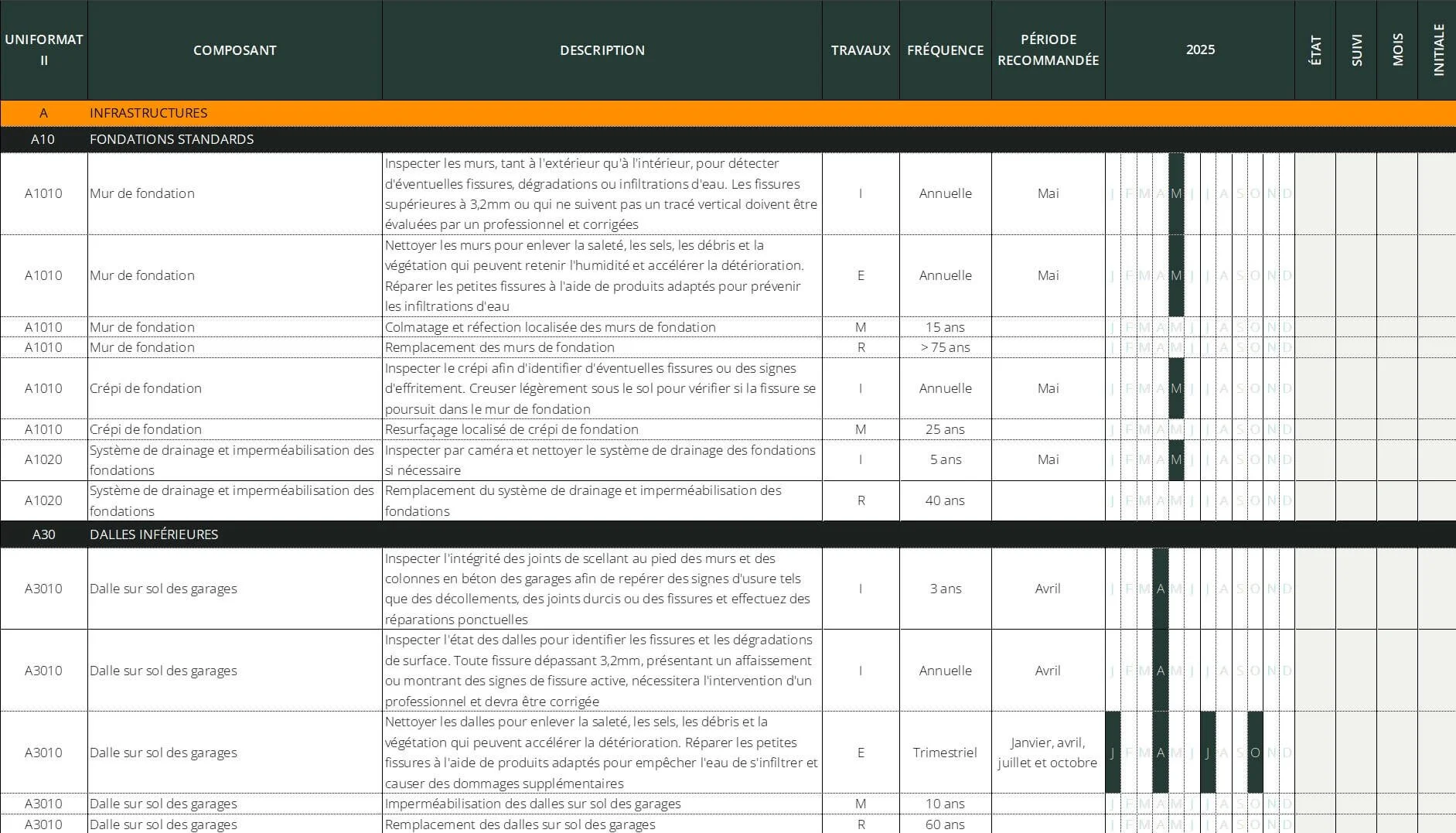
Free template - Maintenance logbook
Free template download - no commitment required.
-

Free template - Syndicate certificate
It's free.